
Winter Storm Prep for Horses: Practical Lessons From the Farm
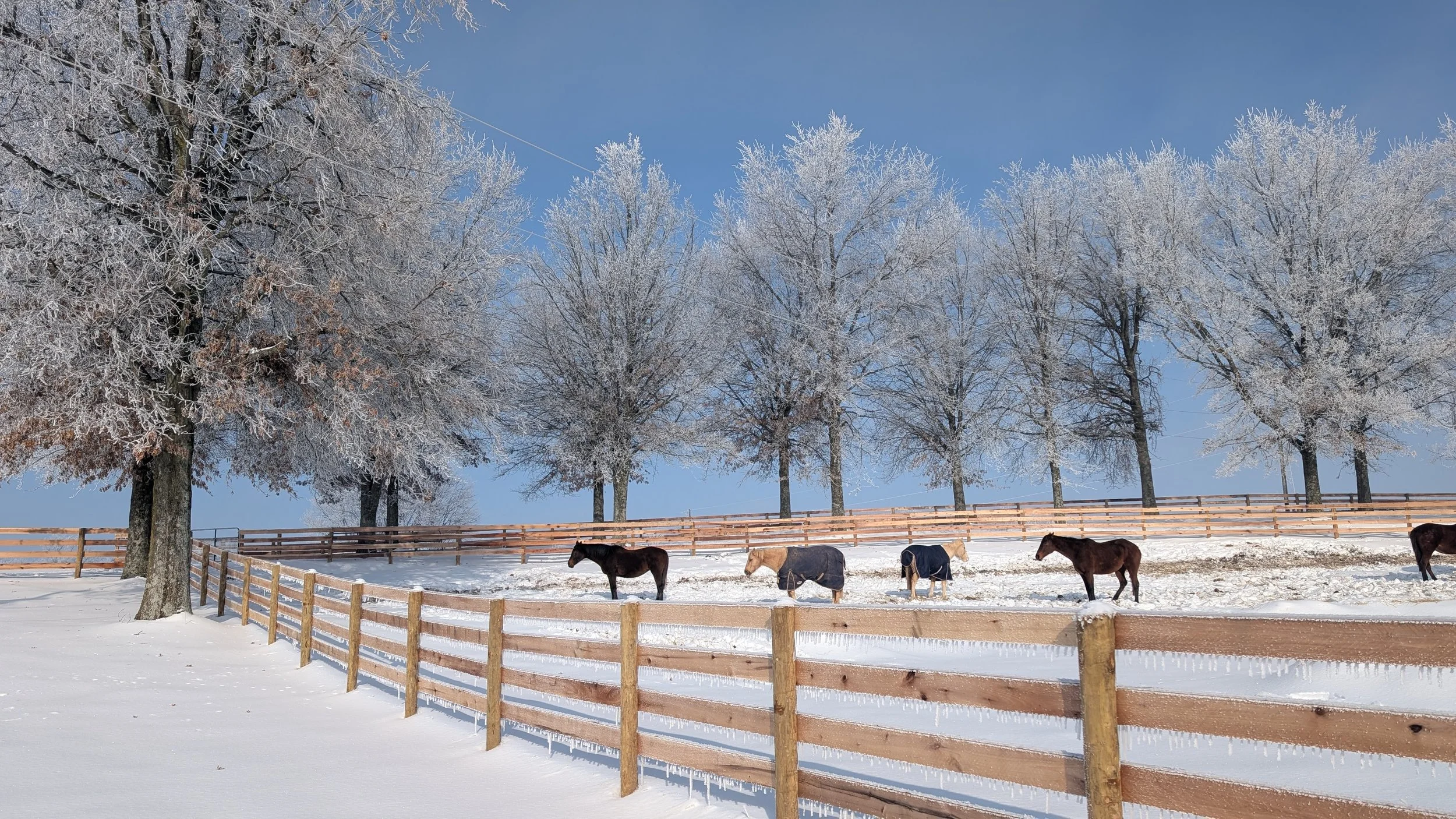
Winter storms don’t all behave the same, and horses don’t all respond to cold the same way either. Snow, ice, freezing rain, and sudden temperature swings each create very different challenges. Over the years at Horse Husband Stables, our most valuable winter lessons haven’t come from manuals — they’ve come from watching horses closely through storms, power outages, and extreme cold.
Preparation isn’t about reacting once conditions turn bad. It’s about understanding how horses regulate temperature, hydration, movement, and energy, and setting them up to do that safely.
Snow Is Manageable. Ice Is the Real Risk.
Snow alone is often easier on horses than people expect. It insulates, provides relatively predictable footing, and doesn’t usually interfere with water systems or power lines.
Ice is different.
Ice creates unstable footing, especially when it forms a hard crust beneath fresh snow. Horses can break through unevenly, leading to slips, panic, bruising, or lower-leg injuries. Young horses and pregnant mares are especially vulnerable.
Before turnout after an ice event, we focus on breaking up crusted surfaces and creating clear, safe paths to hay and water. The goal isn’t to eliminate snow — it’s to eliminate unpredictability.
Let Horses Choose — But Remove the Hazards
Horses are excellent at regulating themselves when given safe options. We clear paths to essentials like hay and water while leaving surrounding snow intact when possible. This allows horses to move where they feel most comfortable without being forced across dangerous footing.
For horses experiencing their first winter storms, reducing surprises underfoot is especially important. A surface that suddenly “gives way” can be far more frightening than cold itself.
Water Comes First — Always
Cold weather reduces drinking faster than almost anything else. Poor hydration increases the risk of impaction colic and other complications.
We plan water access aggressively:
Multiple heated troughs staged in advance
Backup water sources inside barns
Redundant systems in case automatic waterers fail
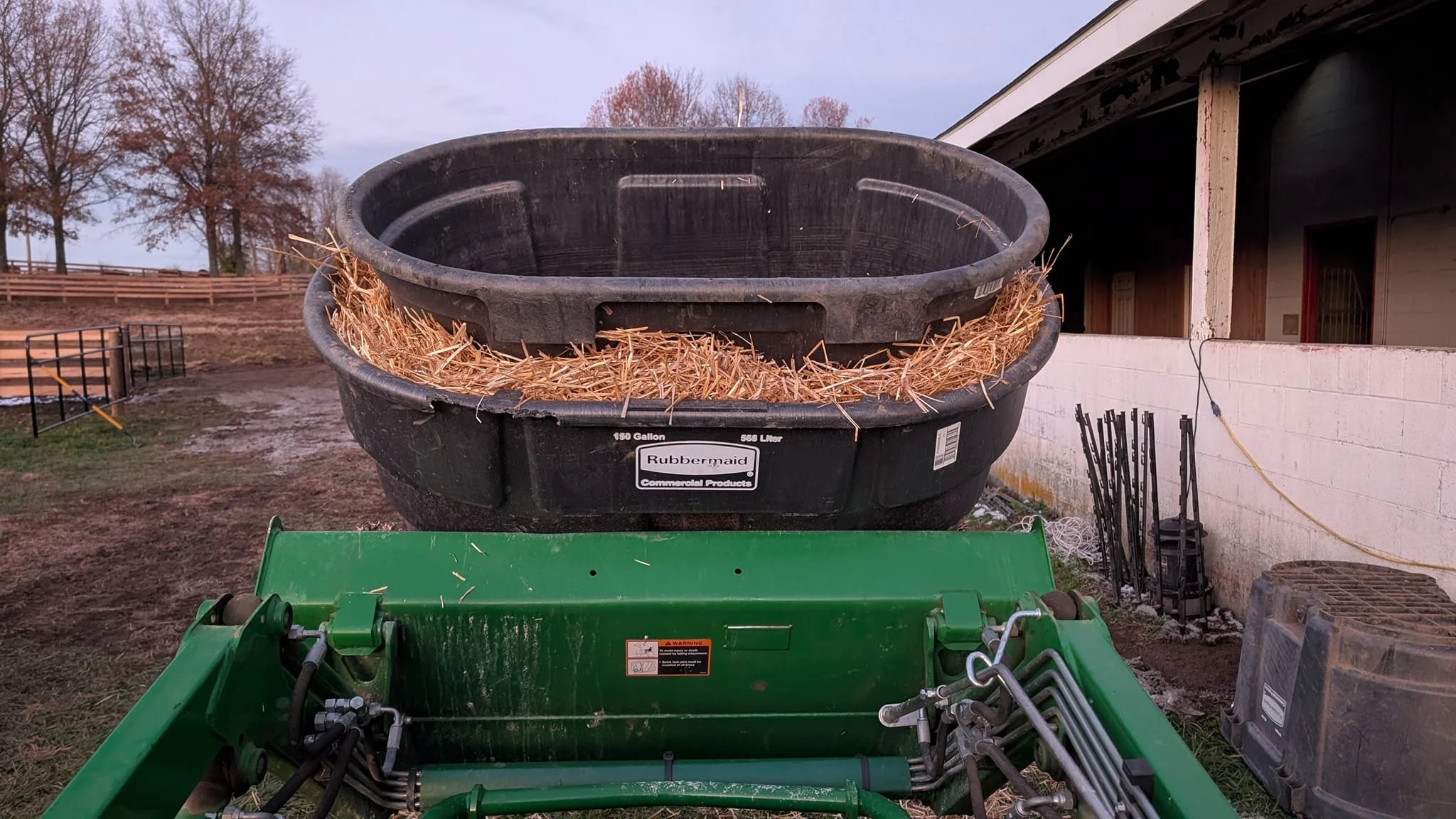
One of the most effective non-electric tools we’ve tested is trough insulation. Repeated trials showed that troughs insulated with straw stayed liquid overnight in temperatures that caused uninsulated troughs to ice over. Straw traps air, slowing heat loss and acting as a natural insulator.
When heaters aren’t available, another science-backed strategy is not breaking all the ice. Leaving most of the ice intact while opening a single drinking hole allows the ice itself to act as insulation, helping prevent the water below from freezing solid.
Hay Is Heat — And It Must Be Available at All Times
If water is the first priority in winter, hay is the second.
Horses generate a significant amount of body heat through fermentation in the hindgut. As fiber is broken down by microbes, heat is released as a byproduct. This is why horses are often referred to as “hay burners.”
During storms and cold snaps:
Hay should never run out
Intake should increase, not decrease
Extra hay is more effective than extra grain for warmth
Hay provides slow, steady heat production over many hours, helping maintain core body temperature and reducing energy lost to shivering. From a management standpoint, constant hay access also supports gut motility and hydration, since horses are more likely to drink when they are eating.
Blanketing Is Individual, Not Calendar-Based
There is no universal temperature where horses “need” blankets.
Blanketing decisions should consider wind, moisture, body condition, hair coat loft, and individual tolerance. A key mistake is flattening a horse’s natural insulation too early. When horses are cold, their hair stands up to trap air. A poorly timed blanket can actually make a horse colder by collapsing that loft.
Light shivering can be part of a normal warming response. Persistent shivering, especially paired with a low body temperature or behavioral change, is not. Hay intake, movement, and close observation often matter more than blanket weight alone.
Movement Matters — For Warmth, Circulation, and Feet
Cold weather often leads to horses standing still for long periods, especially when footing is poor or horses are confined indoors. While rest is normal, movement plays a critical role in winter health.
When horses move:
Muscles generate heat through contraction
Blood circulation improves, warming extremities
Joint fluid stays mobile
Hooves receive better blood flow
Physiologically, muscle activity increases metabolic heat production and helps maintain core temperature. Improved circulation also supports hoof health, which is especially important during cold weather when blood flow naturally decreases.
When turnout is available, we encourage movement by spreading hay in multiple locations and creating safe walking paths. When horses must stay inside due to ice or extreme weather, we build movement intentionally through short, frequent hand-walking sessions in barn aisles.
Even light movement, combined with adequate hay intake, can make a meaningful difference in comfort and warmth.
Heated Water Isn’t a Luxury — It’s Prevention
Warm water dramatically increases voluntary intake. During severe cold snaps, we intentionally stage hundreds of gallons of heated water so we’re not dependent on a single system.
Knowing how many gallons the herd needs over several days allows us to plan realistically rather than reactively if conditions worsen or systems fail.
Frozen Buckets Don’t Have to Waste Water
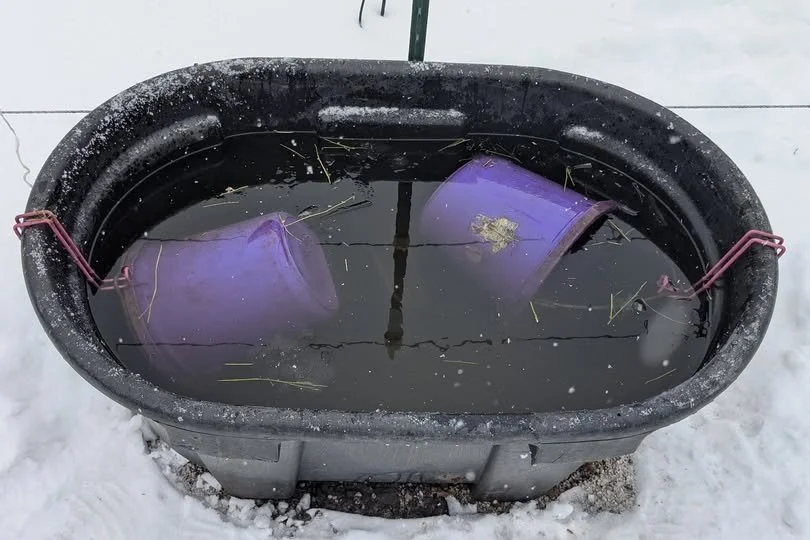
Instead of dumping frozen buckets and creating icy walkways, we thaw them directly in heated troughs. This conserves water, saves time, and reduces ice buildup around barns.
Cleanliness still matters. Buckets are rotated and scrubbed regularly, debris is skimmed from troughs, and only water buckets — not feed buckets — are thawed this way.
When Cold Is Extreme, Hydration Gets Strategic
During severe cold or wind chill events, we often bring horses inside and use warm alfalfa pellet mashes to guarantee hydration. Each mash provides a known volume of water and allows us to monitor appetite closely.
This approach ensures hydration even when trough use drops and helps identify subtle changes early.
Know Your Baselines Before You Need Them
One of the most important winter tools isn’t equipment — it’s familiarity.
Knowing each horse’s normal temperature, behavior, movement, and appetite allows small changes to stand out early. Mild shivering with a normal temperature may warrant monitoring. Shivering paired with a low temperature or behavioral change warrants action.
Adjusting Back Matters Too
Storm prep doesn’t end when temperatures rise.
A sweaty horse under blankets during a sudden warm-up can be just as problematic as a cold horse during a storm. We step blankets down gradually and continue monitoring, adjusting based on weather, body temperature, and how each horse feels under their layers.
Preparedness Is a Commitment
Extra heaters, backup water, additional hay, and frequent checks all require time, effort, and expense. But storms don’t wait for convenience.
Preparation isn’t about comfort. It’s about continuity of care, risk reduction, and honoring the responsibility we take on when we commit to horses for life.
At Horse Husband Stables, winter preparation is simply part of that promise.
See These Winter Decisions in Real Time
The guidance above is based on years of real-time observation during winter storms. For those who want to see these principles applied with real horses in real conditions, the posts from our Facebook page below are organized by topic and documented as the weather unfolded.
💧 Water Management in Winter
Winter Water Trough Insulation Experiment (Night 1)
Trough insulated with straw stayed completely liquid overnight while an uninsulated control trough developed ice.
https://www.facebook.com/reel/1800728890734990
Follow-Up: Insulated Trough Holds Through Multiple Cold Nights
Continued success of straw insulation as temperatures dropped below 25°F.
https://www.facebook.com/ottbguy/posts/pfbid0aEptTSfWWiQJBwCMN9yUsZne8V91FEzmHgBhssWRJ5wjDxMvvPoSke8sY5XQiKE8l
Winter Water Hack: Why You Shouldn’t Break All the Ice
Explains the science behind ice acting as a natural insulator when a drinking hole is maintained.
https://www.facebook.com/watch/?v=516325437463049
Frozen Buckets: Thawing in Heated Troughs
A practical method to save time, reduce ice, and conserve water during sub-freezing temperatures.
https://www.facebook.com/watch/?v=804836106363276
Step-by-Step: Recycling Frozen Bucket Water Safely
Detailed process for thawing buckets in troughs while keeping water clean and drinkable.
https://www.facebook.com/ottbguy/posts/pfbid0Y8BbZr6bxE2GzzCzAo9YjbA1RiTdiHu71Mg8RHrdCCVRuZj2d8sLCPpe8QXSwBNQl
🌾 Hay, Calories, and Internal Heat
Midday Alfalfa Mash During Extreme Cold
Using warm mashes to guarantee hydration and monitor appetite during a −27°F wind chill.
https://www.facebook.com/ottbguy/posts/pfbid0JcpUi7PCm4a1cYAz8z7yv14P2cVqGeBAS4kfWiXisui1ezTV5nEe9uXYhaQrTbVul
Why Hay Is the Most Effective Winter Heat Source
Demonstrates how continuous hay intake supports warmth, hydration, and energy during storms.
https://www.facebook.com/watch/?v=1276081896154240
❄️ Blanketing: When, Why, and When Not To
To Blanket or Not to Blanket? A Real-World Check
What to look for at 20°F with no wind, including shivering patterns and hair coat loft.
https://www.facebook.com/watch/?v=1634994970785718
Cold-Weather Monitoring for Horses New to Winter
Why observation matters more than rushing to blankets, especially for horses acclimating from warm climates.
https://www.facebook.com/watch/?v=1276081896154240
How to Step Blankets Down After a Sudden Warm-Up
Adjusting layers safely when temperatures swing from extreme cold to near 60°F.
https://www.facebook.com/watch/?v=2726414450828331
🐾 Movement, Footing, and Safety
Breaking Ice Crusts for Young Horses
Why reducing “surprise footing” matters for yearlings and pregnant mares.
https://www.facebook.com/watch/?v=1143213140778203
Creating Safe Paths to Hay and Water After Ice
Encouraging movement while minimizing slip and fall risk.
https://www.facebook.com/watch/?v=1143213140778203
Using Movement to Stop Shivering
How light hand-walking, added insulation, and warm hydration worked together to restore comfort.
https://www.facebook.com/watch/?v=2964814390486882
🌫️ Winter Weather Hazards Beyond Snow
Frozen Fog and Rime Ice: Why It’s Dangerous
Explains how freezing fog affects trees, footing, power lines, visibility, and livestock safety.
https://www.facebook.com/ottbguy/posts/pfbid0876iWchTfxy1iRLhyumcRqVvoJQ7U4K68kkUkF6zkawyLx4CXLc5odmuJ9AqrZpal
🩺 Monitoring, Vitals, and Knowing When to Act
When Shivering Is Normal — And When It’s Not
How body temperature, behavior, and response to intervention guide next steps.
https://www.facebook.com/watch/?v=2964814390486882
Why Knowing Baselines Matters in Winter
Using normal vitals and behavior to catch subtle changes early.
https://www.facebook.com/watch/?v=2964814390486882