Understanding NI (Neonatal Isoerythrolysis): Why We Test Every Mare Before Foaling
What Is NI (Neonatal Isoerythrolysis) in Horses?
As we get closer to foaling season, one of the most important—and least talked about—parts of preparation is NI testing.
Neonatal Isoerythrolysis (NI) is a condition that occurs when there is a blood type incompatibility between a mare and her foal.
Here’s how it works:
A foal inherits blood traits from both the mare and the stallion
In some cases, the mare’s immune system sees part of the foal’s blood as “foreign”
The mare produces antibodies against those red blood cells
Those antibodies are present in the colostrum (first milk)
The key detail:
The foal is born healthy. The risk begins after it nurses.
Why NI Can Be Dangerous
If a mare is NI positive, those antibodies can:
Destroy the foal’s red blood cells
Cause rapid onset anemia
Lead to weakness, jaundice, or collapse
Become life-threatening within the first 24–72 hours
Without testing, the first sign is often a foal that suddenly declines after appearing completely normal at birth.
What the NI Test Looks For
The NI test checks whether the mare has developed antibodies against the stallion’s blood type.
There are two outcomes:
Negative → Foal can nurse normally
Positive → Nursing must be managed carefully
This isn’t about guessing—it’s about knowing before the foal is at risk.
What Happens If a Mare Tests Positive?
If a mare is NI positive, the plan changes immediately at birth:
The foal is prevented from nursing initially
We provide safe, alternative colostrum
The foal is monitored closely
Nursing may be introduced later once it is safe
With preparation, this is manageable.
Without preparation, it can escalate quickly.
Why We Test Every 14 Days
This is where timing matters.
A mare can:
Test negative earlier in pregnancy
Then become positive closer to foaling
That’s why we:
Begin testing in late pregnancy
Repeat testing every 14 days
Ensure we always have a current result going into foaling
Real-Time Example: How NI Testing Applies to Audi & Dyana
To make this more concrete, here’s exactly how we’re applying NI testing right now with our two mares:
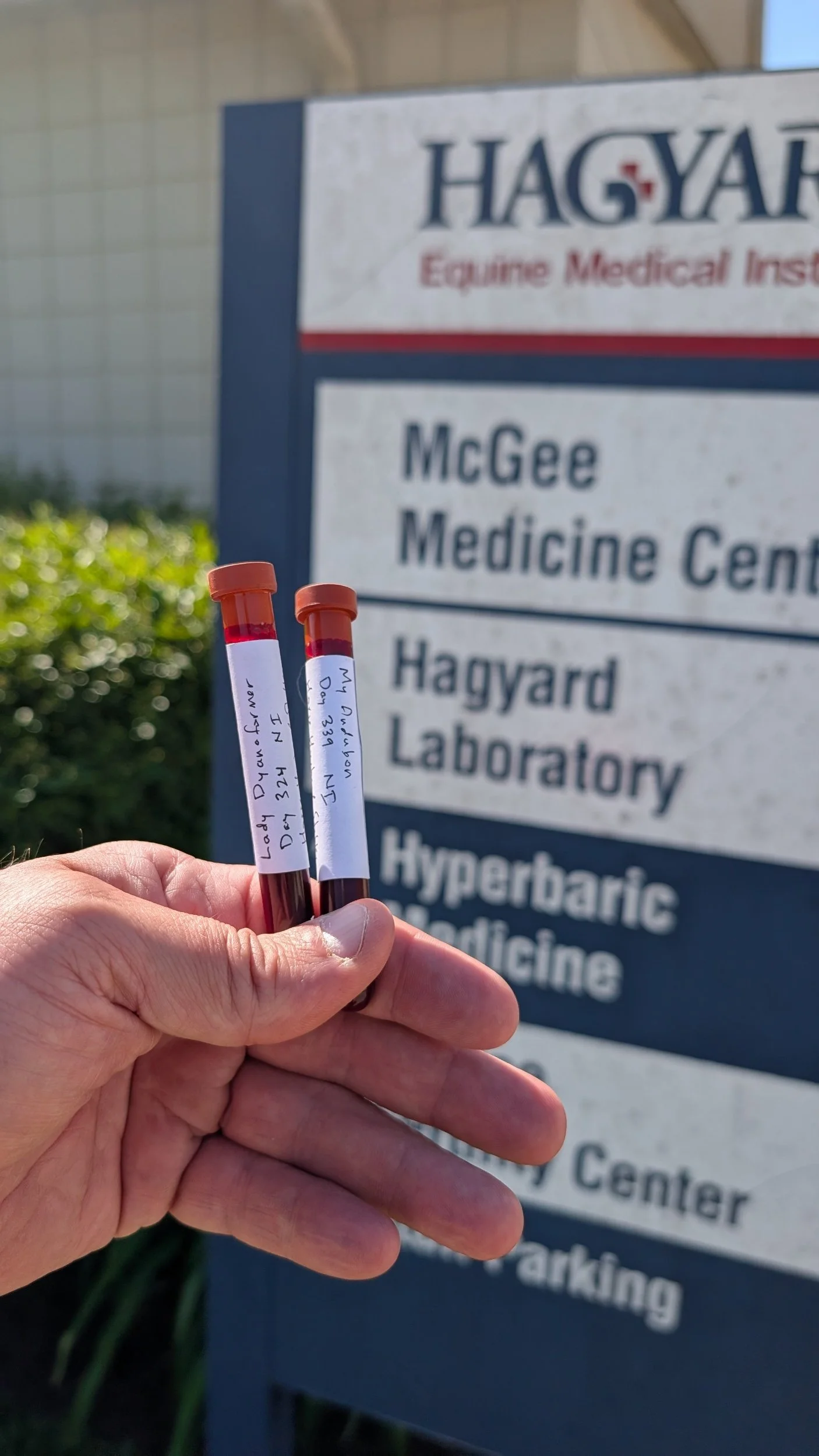
This morning, we dropped off bloodwork at Hagyard Equine Medical Institute as part of our ongoing NI protocol.
My Audubon (Audi) — Day 339
This is her third NI test this pregnancy
Her first two tests came back negative
Her most recent test prior to today was 14 days ago, which is why we needed to test again now
If she does not foal within the next 14 days, we will need to test her again to keep results current
We started testing Audi earlier than some programs because of how close she is to foaling and how quickly things can change late in pregnancy. Her due date is April 19, just a few days away, so this test ensures we have an up-to-date result going into foaling.
Lady Dyanaformer (Dyana) — Day 324
This is her first NI test this pregnancy
She is just entering the window where testing becomes relevant
If she does not foal by Day 338, we will need to test her again
Dyana’s due date is May 4, so we expect she will likely fall within a timeframe where she needs at least one, and possibly two, tests depending on how close she gets to that date.
Our goal is always to avoid unnecessary testing—but never at the expense of having outdated information.
Why This Matters
This is exactly why NI testing is done on a schedule rather than just once:
Results can change late in pregnancy
A negative result two weeks ago is not enough to rely on today
Each test ensures we are making decisions based on current conditions, not assumptions
For Audi, we’re hoping this is her final test before foaling.
For Dyana, we’re just getting started.
Follow Along as These Foals Arrive
This is just one piece of what goes into foal watch.
From behavior changes to medical prep to the moment a foal stands and nurses, we document the entire process in real time.
👉 Follow Audi and Dyana as they get closer to foaling:
https://www.foaltoforever.com/foal-watch
Bottom Line
NI isn’t common—but it’s serious.
Testing is simple.
Preparation is everything.
And it’s one of the clearest examples of how proactive care protects a foal from the very first hour of life.